Background:
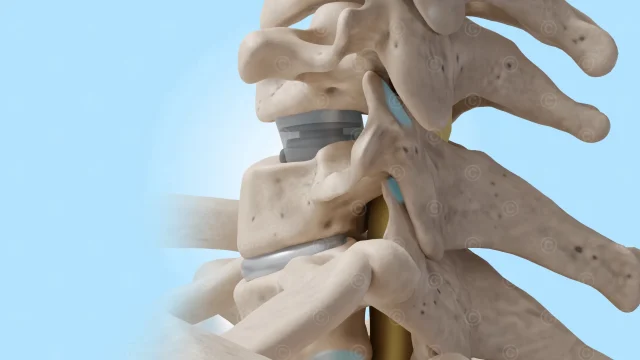
In microneurosurgical interventions on the spine, the procedure is performed through a tubular approach and with the aid of a surgical microscope. To do this, a small incision is gently dilated using a tubular instrument (tubular retractor) to create a working channel for the surgery.
3D Animation minimally invasive spinal surgery
Rights of use of the image material: Inselspital Bern
Music: Kevin McLeod – Impact prelude – Usage license: Creative Commons (CC BY 3.0)
Project description:
We created a 3D animation for Inselspital Bern on minimally invasive spinal surgery using tissue-conserving tubular surgical approaches. The video is used during doctor-patient consultations to help patients better understand the upcoming procedure.
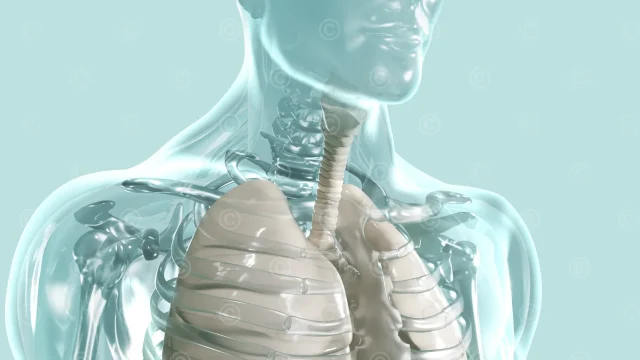
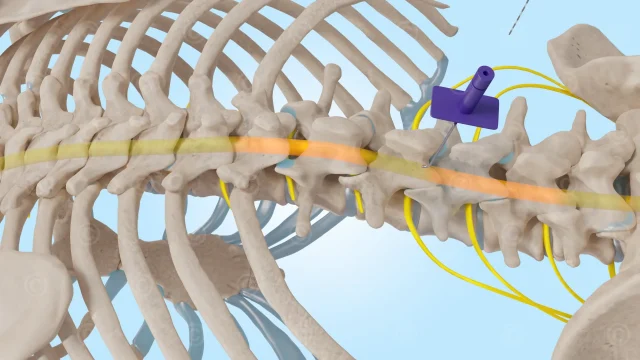
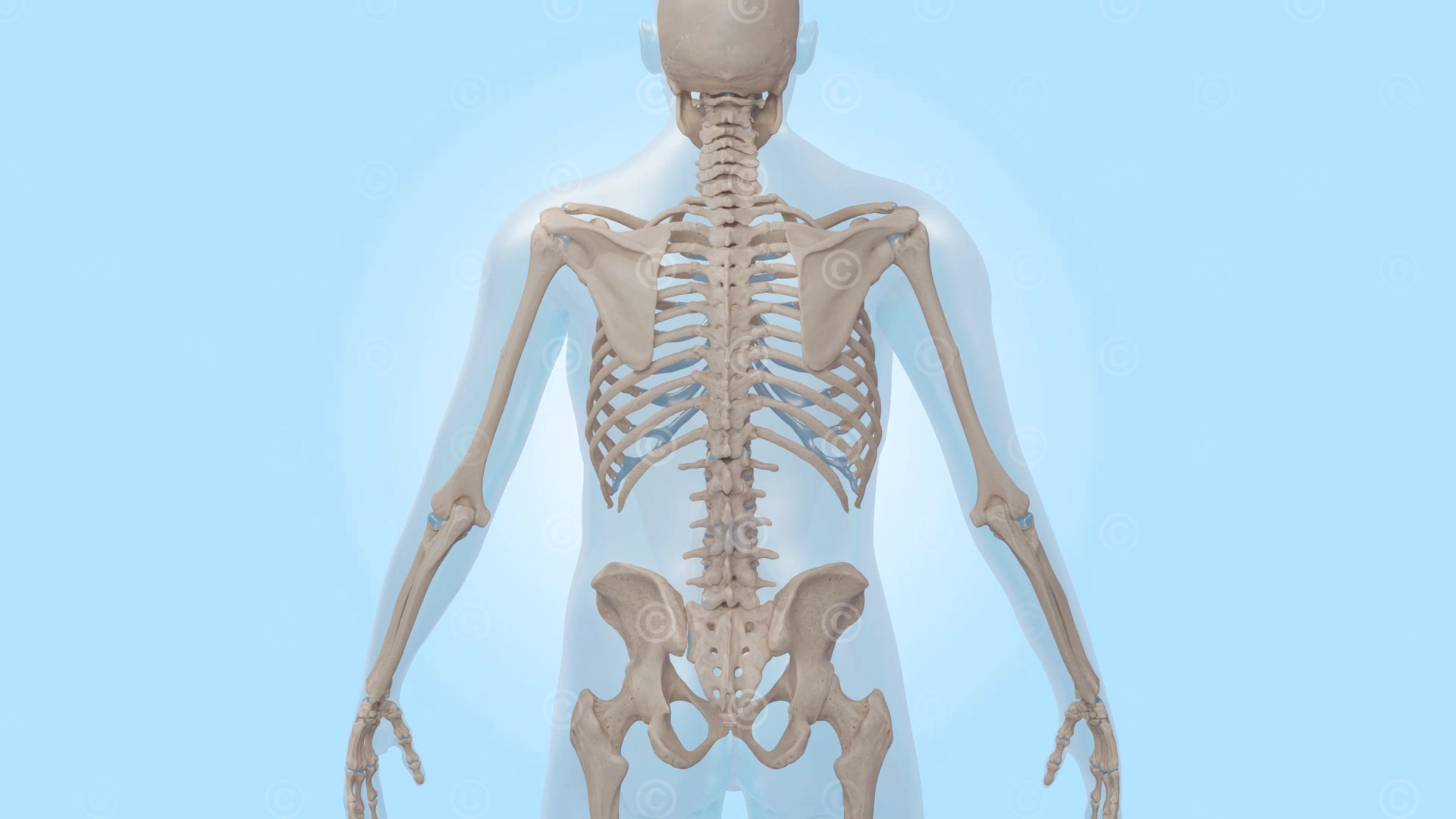
At the beginning of the animation, a skeleton is shown inside a transparent body. The spine is centered in the frame, introducing the topic.
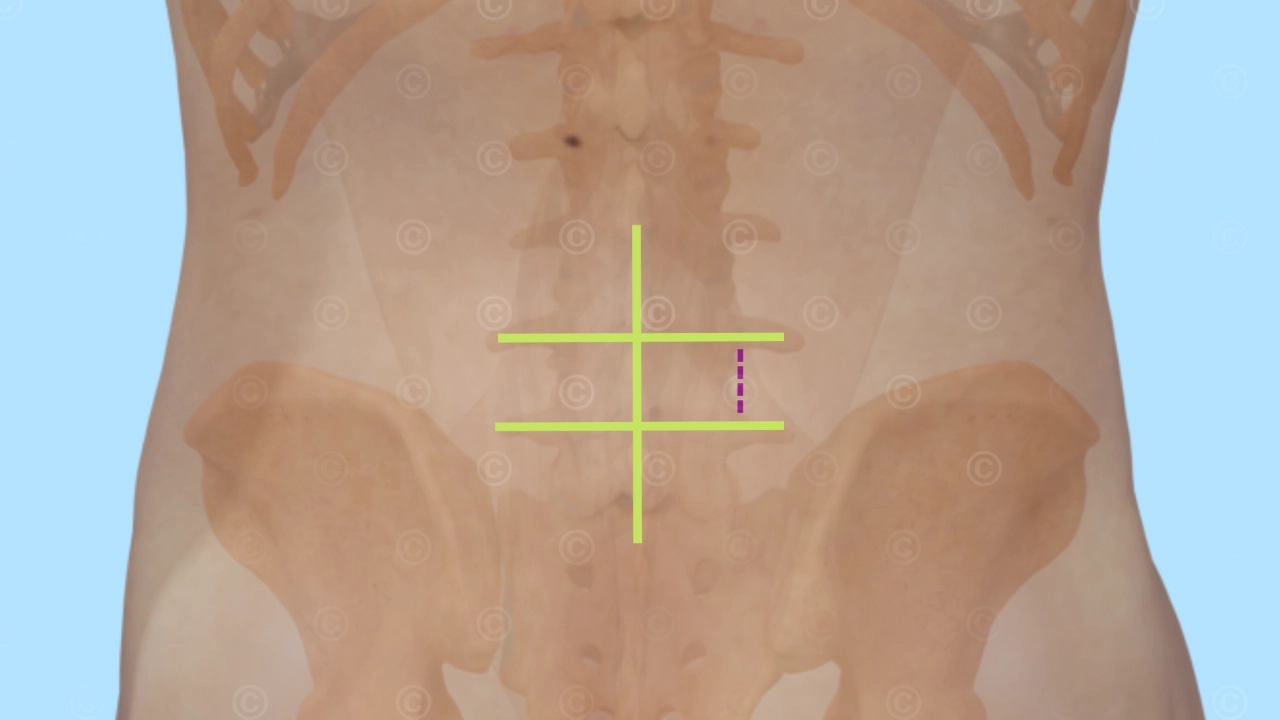
In the next scene, a marked area (purple) highlights the small incision (only 1–2 cm long) made to provide access.
A guide rod is inserted into the desired target site under X-ray guidance.
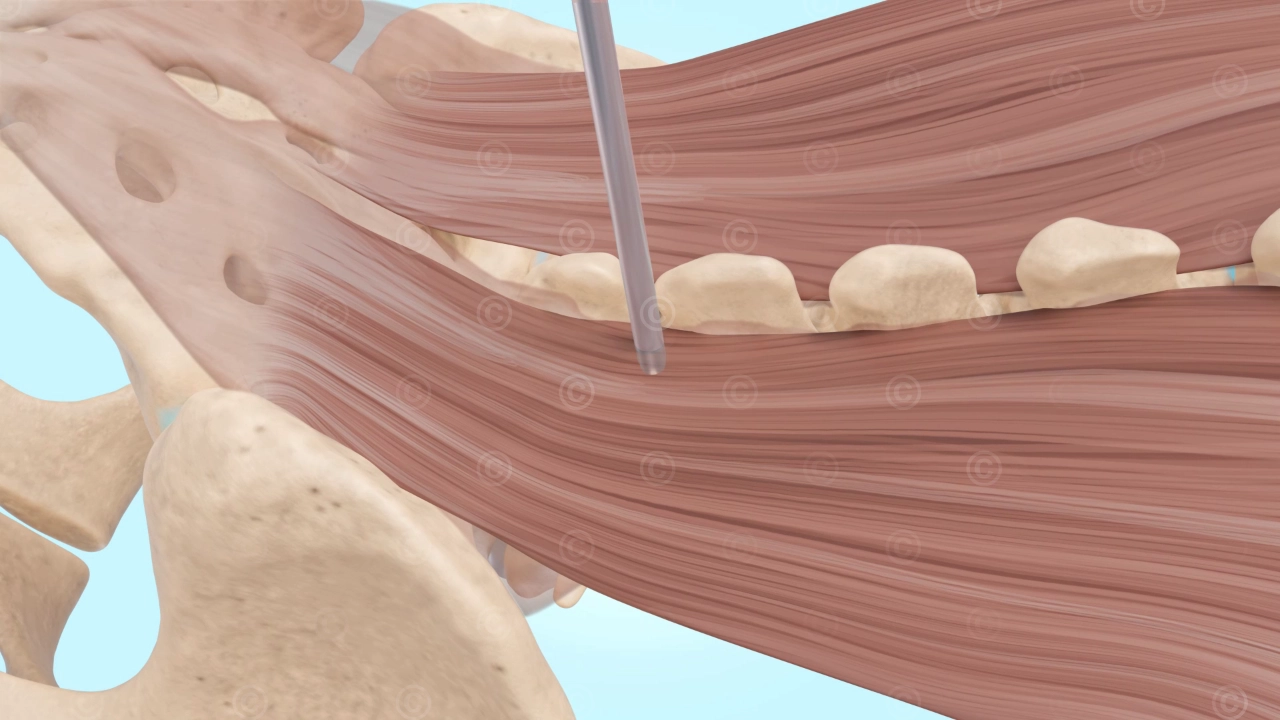
The access area is gradually widened using tubular instruments (tubular retractors) without damaging the tissue or muscles.
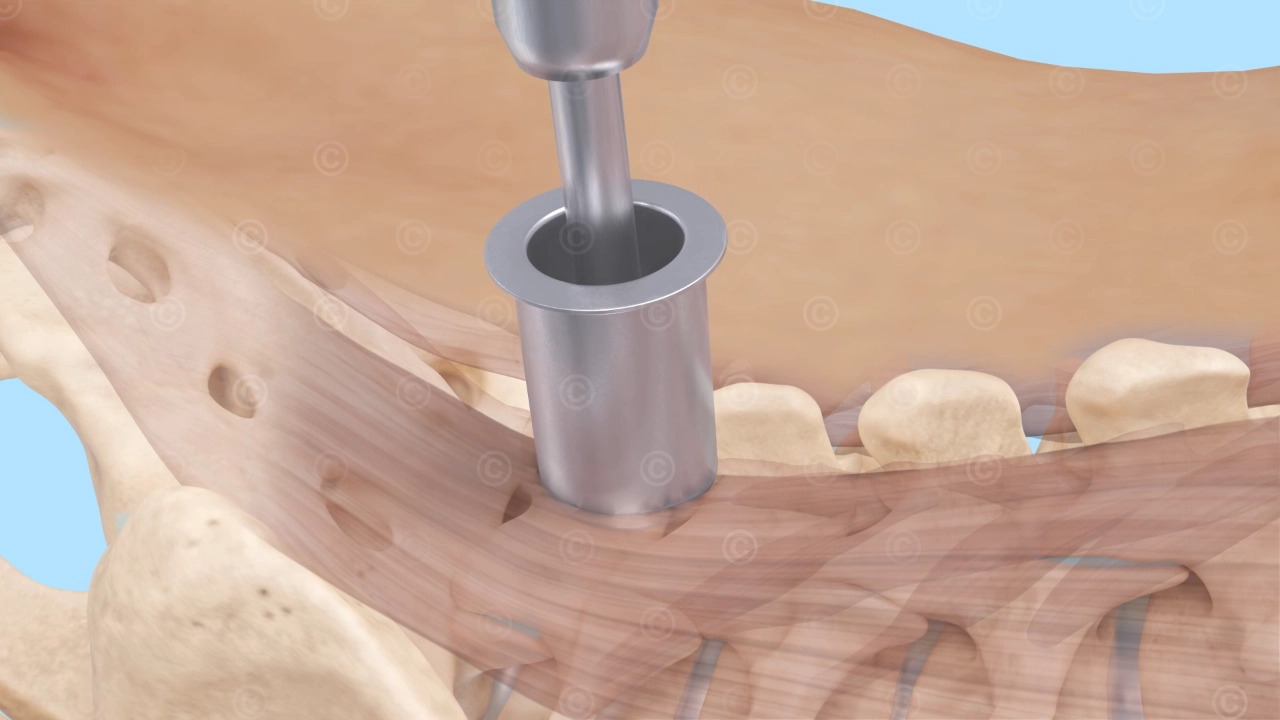
Through the access channel created in this way, surgical micro-instruments can now be guided to the target area on the spine and the surgery can be performed using a microscope.
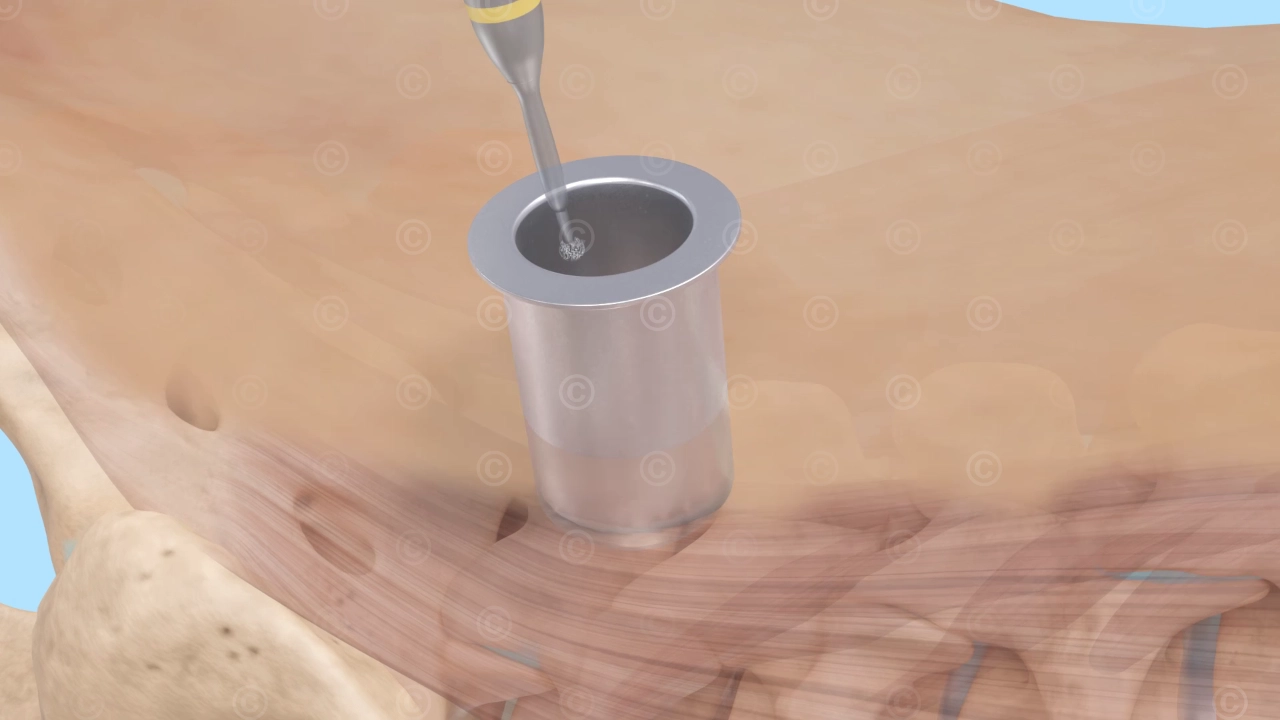
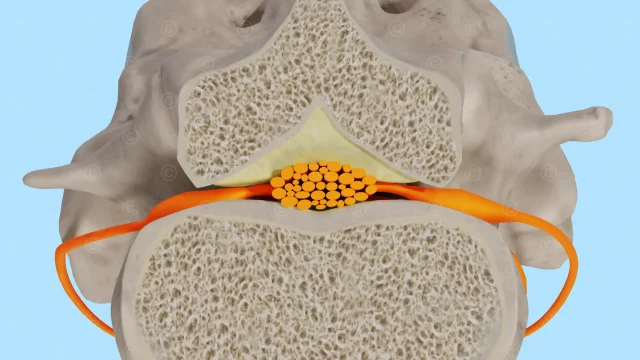
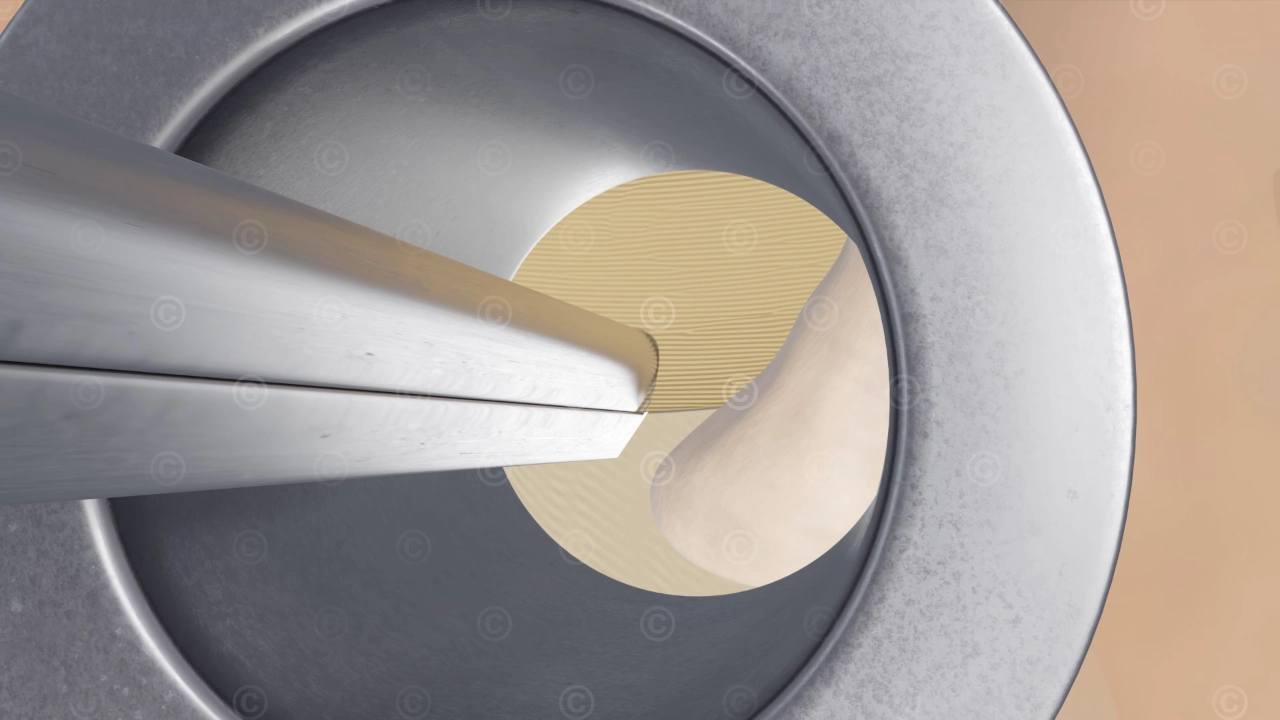
The animation now demonstrates the use of a burr on a vertebra.
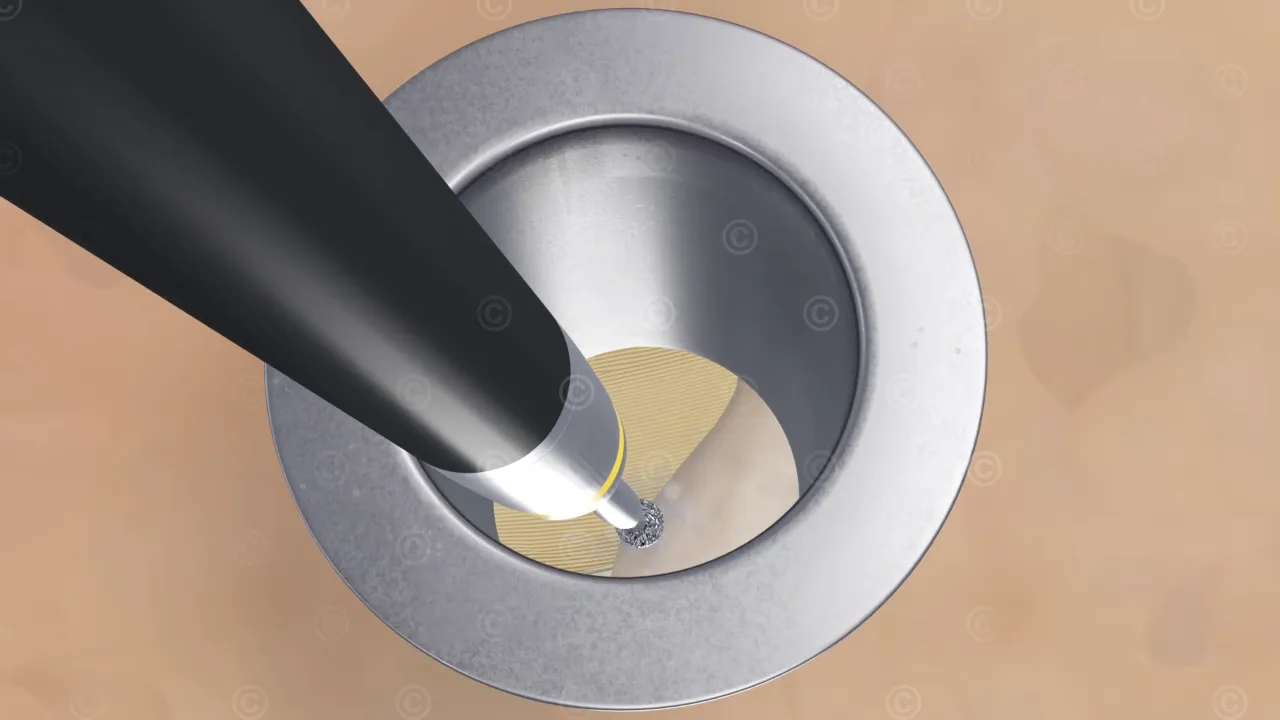
In addition, a punch is introduced to remove pieces of the dura mater.
Project details 3D animation minimally invasive spinal surgery
Content: 3D animation
Use: Information film for patient for use on website or doctor’s consultation
Specs: Full-HD, ~ 1:00 min.
Client: Inselspital Bern, Universitätsklinik für Neurochirurgie, Dr. Andreas Nowacki
The rights of use of the images shown here are held by the client; use of the images shown here is not permitted. Images and video are protected by watermarks.
-> Link to the video page “3D animation minimally invasive spinal surgery”