Background:
Intervertebral discs act as a kind of shock absorber between the vertebrae and at the same time ensure the flexibility of the spine.
Due to wear and tear, which is often age-related, the tissue of the outer annulus fibrosus of the intervertebral disc tears in the event of a herniated disc, and the inner, gel-like core (nucleus pulposus) enters the spinal canal. There, the tissue presses on the spinal cord and spinal nerves, irritating them and causing pain and possibly numbness in the area supplied by the nerves.
3D Animation – herniated disc:
Rights of use of the image material: Inselspital Bern
Music: Kevin McLeod – Impact prelude – Usage license: Creative Commons (CC BY 3.0)
Project description:
We created a 3D animation for Inselspital Bern about the causes of a herniated disc (prolapsed disc). The video is used during doctor-patient consultations to give patients a better understanding of their symptoms and possible treatment options.
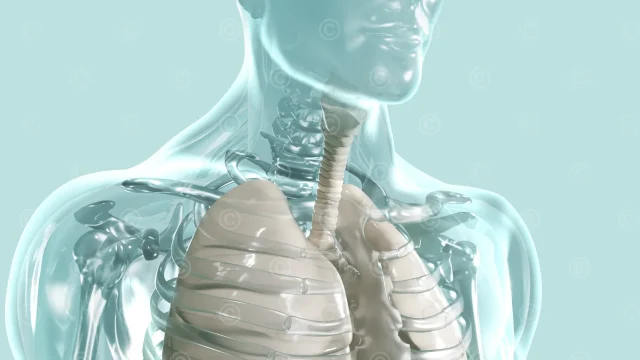
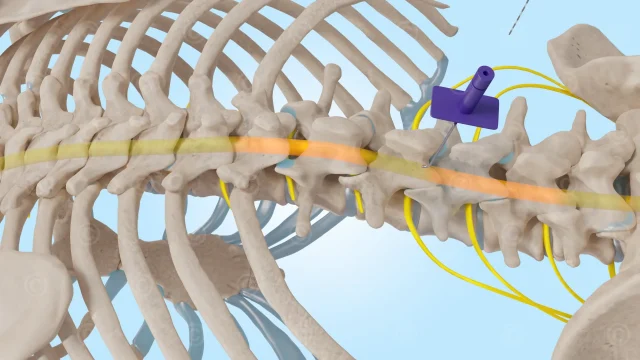
The animation starts with a transparent human figure in which the skeleton can be seen.

Next, the animations shows the spinal cord and the spinal nerves and nerves that branch off from it. For the sake of simplicity, the animation focuses on the nerves of the lumbar spine, as this is the region most commonly affected by herniated discs.

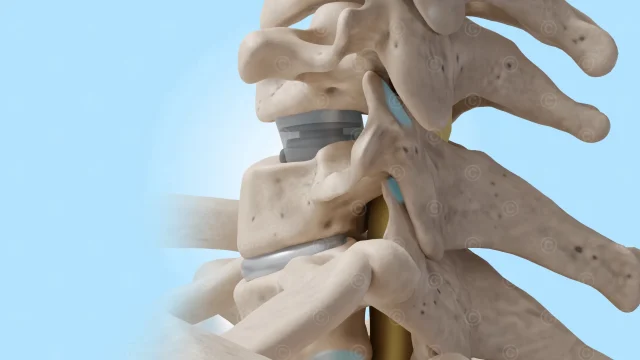
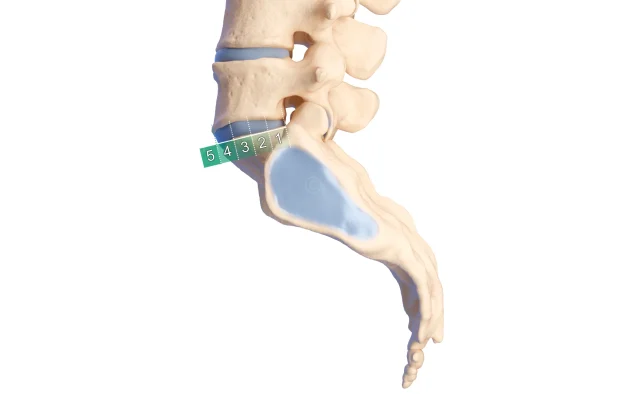
Now the function and structure of the spine are discussed, and the gelatinous core (nucleus pulposus) and fibrous cartilage ring (annulus fibrosus) of the intervertebral disc are shown.

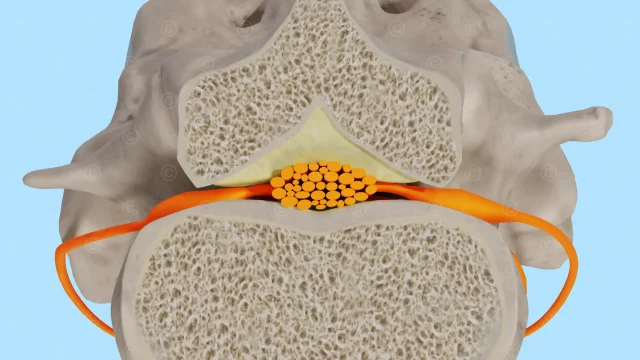
A top view shows the structure of the intervertebral disc and visualizes the spatial proximity of the spinal nerves, spinal cord, and intervertebral disc.

Finally, the herniated disc itself is shown: a tear in the annulus fibrosus of the disc allows tissue from the nucleus pulposus to enter the spinal canal and press on the spinal nerves and spinal cord. The irritation, which causes pain and possibly numbness, is visualized as a red, pulsating area.

Project details 3D animation herniated disc
Content: One medical 3D animation
Use: Information film for patient for use on website or doctor’s consultation
Specs: Full-HD, ~ 0:30 min.
Client: Inselspital Bern, Universitätsklinik für Neurochirurgie, Dr. Andreas Nowacki
The rights of use of the images shown here are held by the client; use of the images shown here is not permitted. Images and video are protected by watermarks.
Screenshots + images 3D animation herniated disc: